• Keighley, West Yorkshire
  • sales@keybury.co.uk
  • Office Hours: 9:00 AM – 5:00 PM
Fire Alarm System Grades

Before a fire protection system can be designed, it is necessary to define the main objectives of the system.
This is normally determined by a Fire Risk Assessment and should be provided as part of the fire system specification.
BS5839 splits fire alarm systems into 3 system design categories:
Category P Systems
Category L Systems
Category M Systems
system grades
Category L

Category L Fire Alarm Systems – Life Protection
Life protection systems can be divided into various categories, L1, L2, L3, L4, L5.

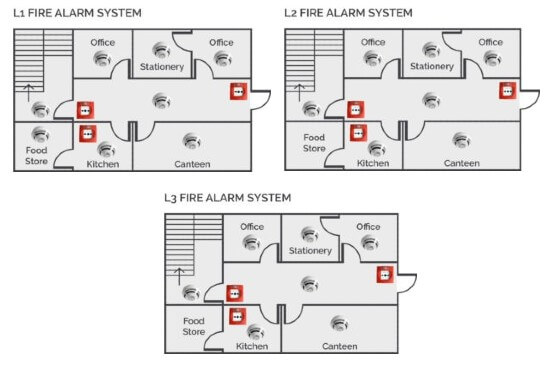
L1 provides for Automatic Fire Detection (AFD) to be installed into all areas of a building.
L2 provides Automatic Fire Detection (AFD) as defined in L3 as well as high risk or hazardous areas. Examples of this could be Kitchens, boiler rooms, sleeping risk, storerooms if not fire resistant or if smoke could affect escape routes.
L3 Automatic Fire Detection (AFD) with smoke detection should be installed on escape routes with detection in rooms opening onto escape routes.

L1, L2, L3 categories
Category L

Category L Fire Alarm Systems – Life Protection

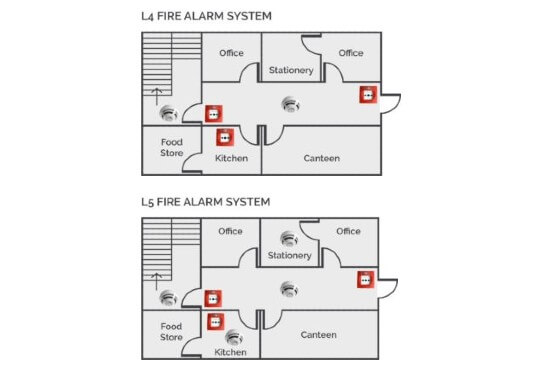
L4 provides Automatic Fire Detection (AFD) within escape routes only.

L5 is installed in building with a specific risk that has been identified.
An example of this would be if there was an area of high risk that requires detection the category would be L5/M.

L4, L5 Categories
Category M

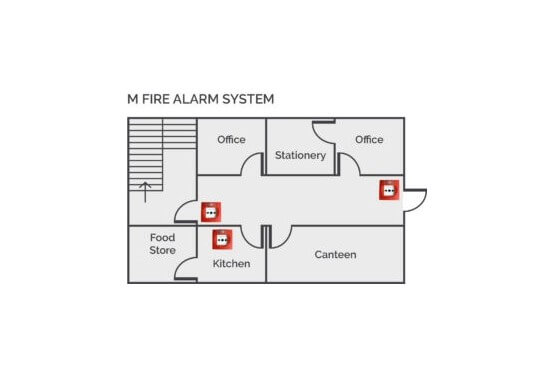
Category M Fire Alarm Systems

M is the last of the fire alarm system grades.

A BS5839 Category M Fire Alarm System is a manual operation only system which has call points on all exits as well as corridors where persons are not expected to walk any more than 45m to operate one.

All categories of life protection will have a type M system installed.

M Category